Film Review: Wicked: For Good
In this treacherous time, as our rule of law is being steadily dismantled, thank you for your patience as I have tried to share examples of hope and direction from past and present. I see "Wicked: For Good" as a brilliant example of this "wake-up call," and regret that The Golden Globes did not honor director Jon M. Chu with a nomination as director and the film itself as one of the worthiest films of the year.
Read the full review of Wicked: For Good on socialworker.com
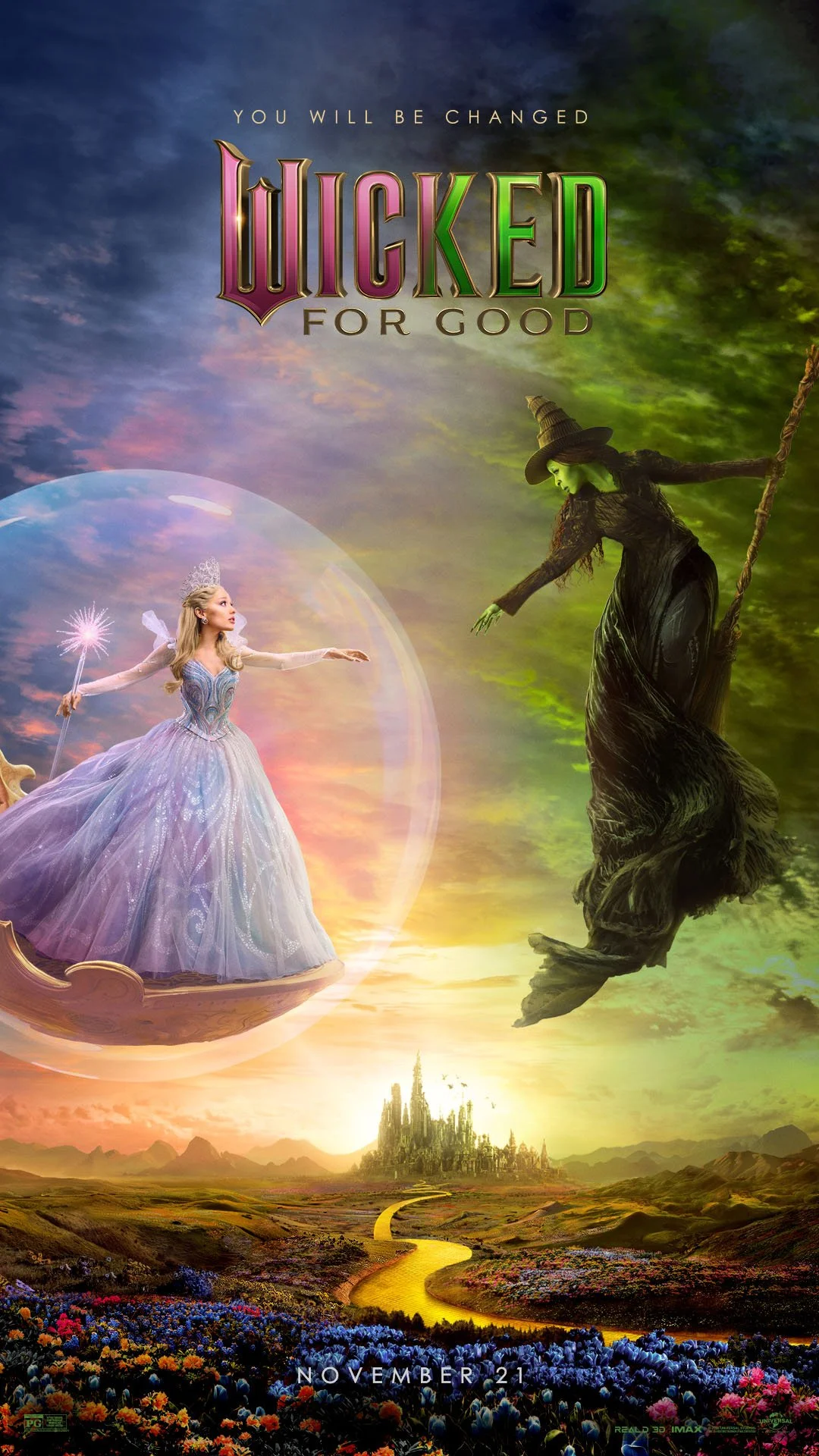
Image Credit: ©2025 Searchlight Pictures
Read the full review on socialworker.com
by SaraKay Smullens, MSW, LCSW, DCSW, CGP, CFLE, BCD
Infuriated when Oliver Stone’s 1994 blockbuster film Natural Born Killers labeled our most vulnerable clients innate killers, I countered by coining the term “natural social workers.” Jon M. Chu is one of us, refusing to label or push clients into rigid categories—predicting change is impossible, hope a fantasy. Through his two-part Wicked extravaganza, Wicked: Part One, released a year ago, and the newly released Wicked: For Good, Chu addresses the complexities of character development—the impact on a child shunned, loathed, abandoned, her only purpose to care for and protect her younger sister, and the impact on another, raised to believe that only her wishes and desires mattered. Like Chu, social workers never accept setbacks as indication to abandon our efforts, quiet our passion, relinquish dreams and the power of hope. In keeping with other reviews, what follows will be a discussion of the film’s framing and Chu’s brilliantly creative intent. There will be no spoilers.
To recap: As Wicked: Part One progressed, two young students, each emotionally abused—Elphaba (Cynthia Erivo), a relentlessly discarded Person of Color, in this case Green, and G(a)linda (Ariana Grande), white, grossly overindulged and overprotected—forge a loyal friendship, despite grave odds. This includes the love each holds for the dashing Prince Fiyero (Jonathan Bailey, People Magazine’s 2025 sexiest man alive). We watch as Elphaba grows beyond the pain of rejection and abandonment. Their relationship opens the door a crack toward Glinda’s awareness.